
How the work is approached
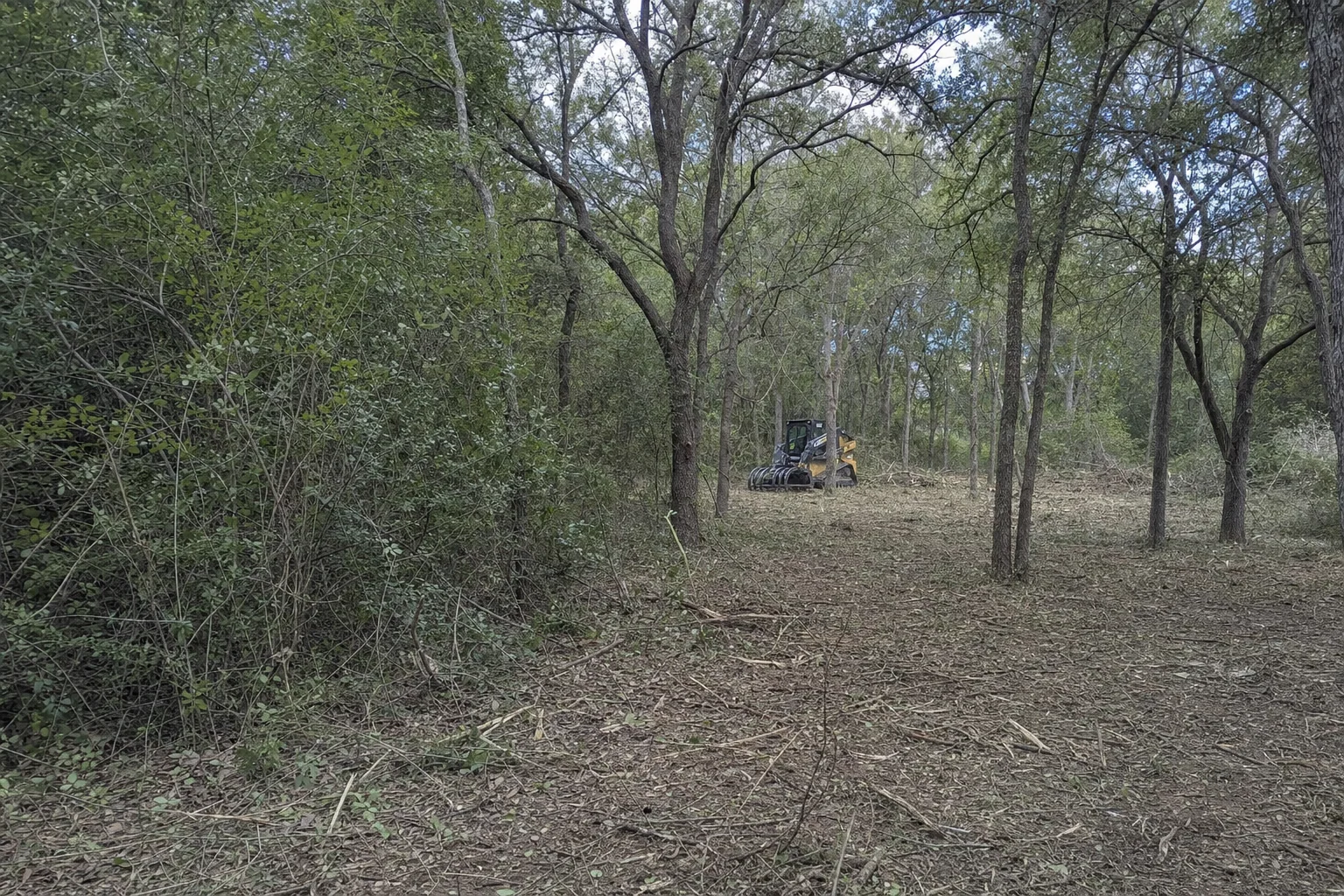
Suitable undergrowth is cut or mulched while retained trees, fences, utilities and drainage features are worked around. Small protected areas may need hand cutting.
What the finish looks like
An accessible understory with the selected canopy still standing. A lightly opened woodland and a thoroughly mulched floor require different amounts of work.
What this does not include
Vines, thorny regrowth and resprouting brush may return. Cutting an understory once is not a permanent maintenance program.
Where the material goes
Cut material can be mulched on the ground, chipped, consolidated or removed, depending on access and the agreed scope.
What changes the estimate
Access between trees, brush density, vines, old fences and the level of hand work often matter as much as acreage.
What happens afterward
Allow for periodic follow-up and keep material away from the base of trees you want to retain.
A few straight answers
Can you work under pine and hardwood trees?
Selective understory work can be planned around retained trees. The method depends on spacing, root zones, ground conditions and access.
Is brush clearing the same as mowing?
No. Mowing suits grass and compatible light growth; established woody brush often needs cutting or mulching equipment.
Method reference: Texas A&M Forest Service — vegetation management. Construction disturbance and runoff: TCEQ guidance. Site-specific requirements still need review.