
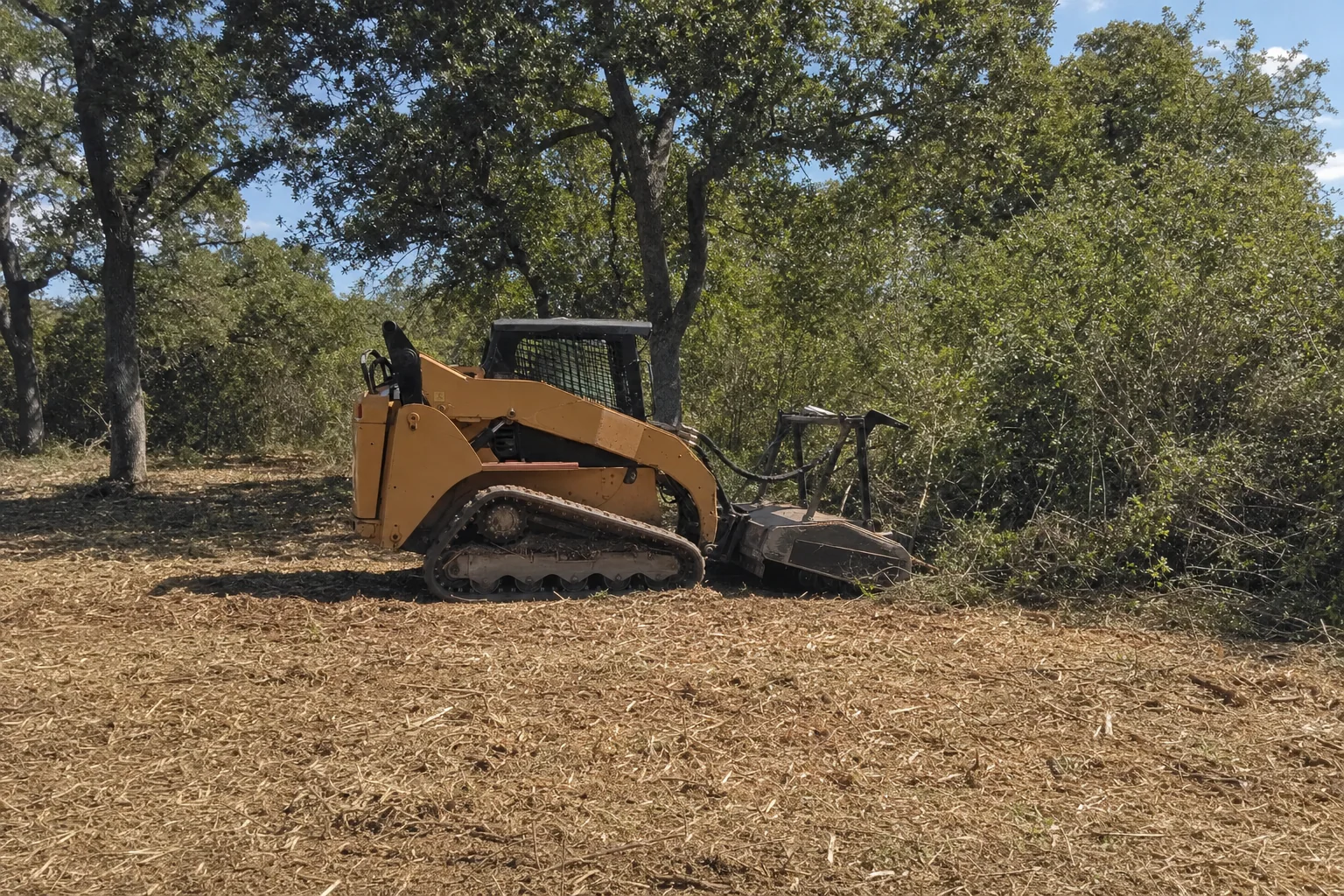
How the work is approached
Walk the work limits, mark the trees that stay, and choose selective cutting, mulching or full clearing and grubbing. An entrance and an agreed material plan come before the machine starts.
What the finish looks like
The finish is written into the scope: mulched ground, an opened understory, or cleared and grubbed ground for the next contractor.
What this does not include
Clearing alone does not include engineered fill, compaction testing, drainage design or a finished building pad.
Where the material goes
Brush can be processed on site, ground in piles or hauled away. We agree on the method and where any remaining material goes.
What changes the estimate
Vegetation size and density, acreage actually being cleared, access, slopes, hidden debris and the required finish all change the price.
What happens afterward
Check regrowth and stabilize disturbed soil. If construction follows, confirm the pad, drainage and testing requirements before treating the clearing as complete.
A few straight answers
Can you keep my good trees?
Yes. Selective clearing begins with identifying what stays and the room needed to work around it. Tight areas may need hand work rather than a machine pass.
Is the whole property priced as cleared acreage?
The estimate should distinguish total property size from the actual work area. A trail through 20 acres is not the same scope as clearing all 20 acres.
Method reference: Texas A&M Forest Service — vegetation management. Construction disturbance and runoff: TCEQ guidance. Site-specific requirements still need review.