
How the work is approached
Review the route and any required design or authority requirements. Scope excavation, bedding, pipe, grading and stabilization together.
What the finish looks like
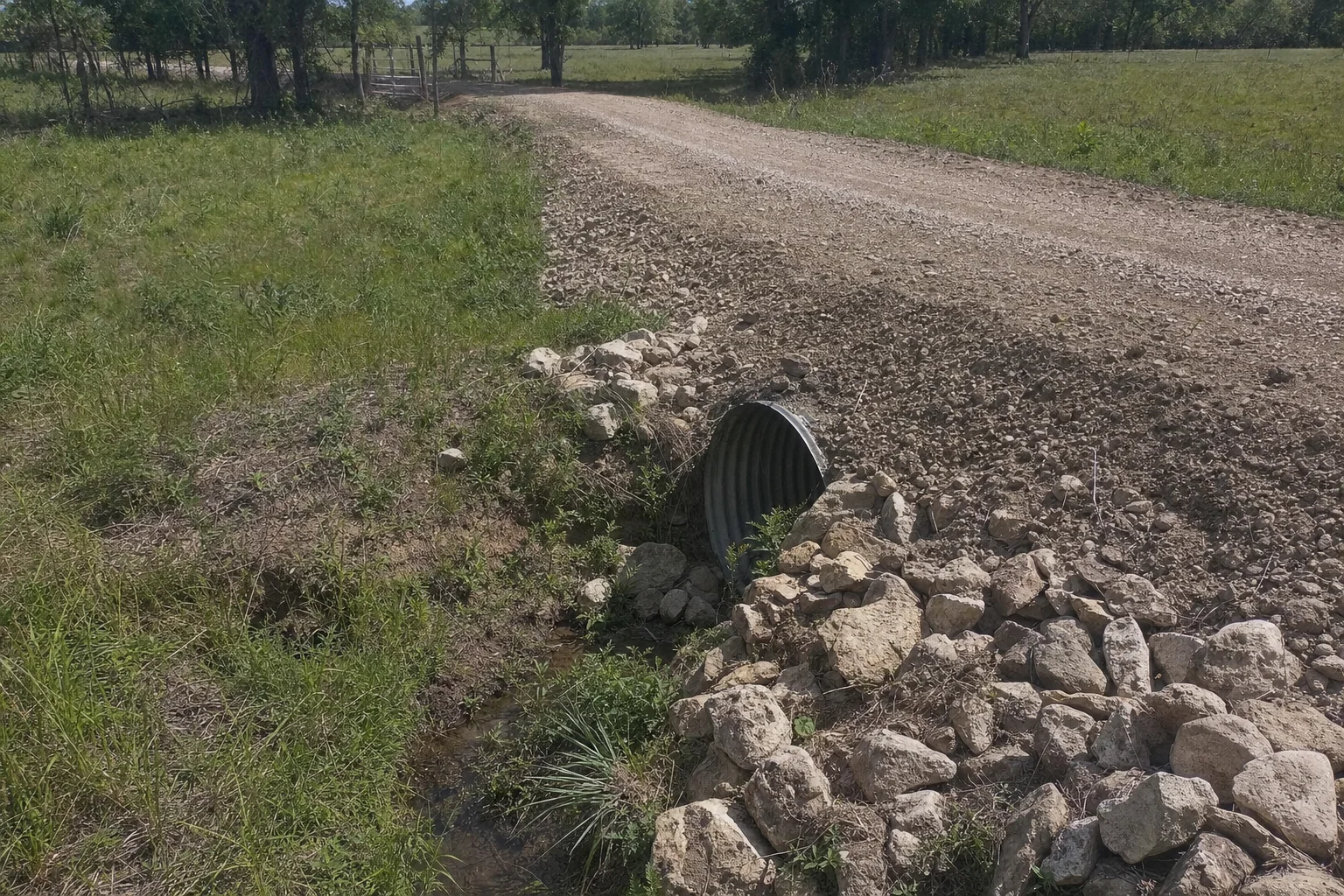
An installed crossing or shaped surface route to the agreed specification, with inlet and outlet treatment included as needed.
What this does not include
Floodplain, watercourse, capacity and downstream impacts may require professional design or approvals beyond this work scope.
Where the material goes
Pipe, bedding, backfill and erosion protection are specified and priced with installation.
What changes the estimate
Crossing size, excavation, pipe specification, access, water, rock and stabilization affect the quote.
What happens afterward
Inspect inlets and outlets after rain and keep debris from blocking the system.
A few straight answers
Can you choose the culvert size from a photo?
A photo helps identify the situation but is not a drainage capacity calculation. Required sizing or authority approval must be addressed.
Can you redirect water toward the boundary?
Any proposed change needs review for downstream effects and local requirements. Moving a problem to another property is not an acceptable plan.
Method reference: Texas A&M Forest Service — vegetation management. Construction disturbance and runoff: TCEQ guidance. Site-specific requirements still need review.