
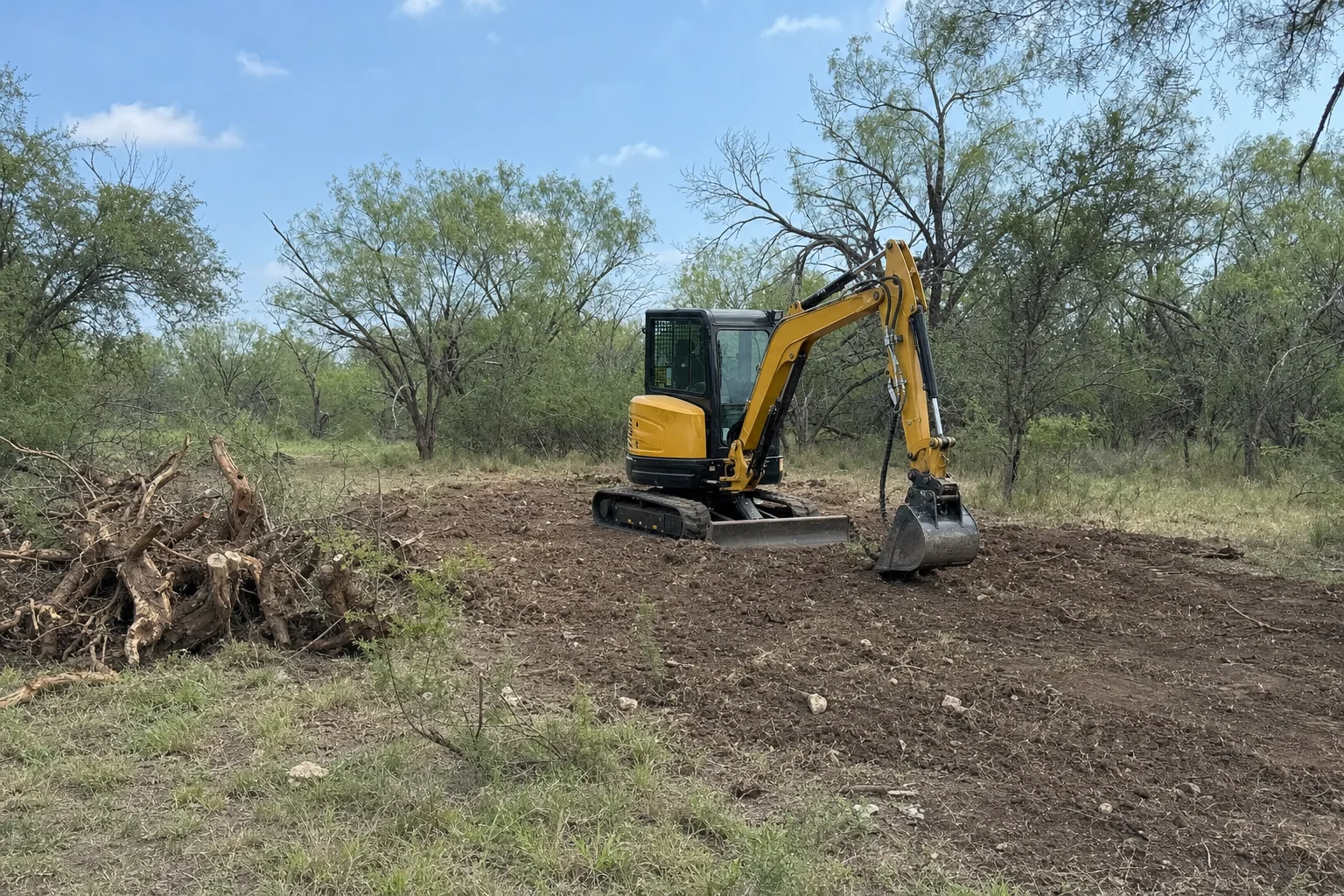
How the work is approached
Survey the size and density, then define top-growth removal or mechanical grubbing. Grubbing targets the root crown and disturbs more ground than mulching.
What the finish looks like
The scope states whether roots remain and whether disturbed ground will be dressed or stabilized afterward.
What this does not include
Mesquite can resprout after top removal. We do not promise permanent control from a single mulcher pass or advertise herbicide application in this scope.
Where the material goes
Material may be processed on site, gathered or hauled. Uprooted root material needs its own disposal allowance.
What changes the estimate
Plant size, root work, density, rocks, access and cleanup determine the work. Grubbing is not priced as the same finish as mowing.
What happens afterward
Inspect the area for regrowth and seedlings. Texas A&M Brush Busters is a useful reference when planning longer-term control.
A few straight answers
Will a mulcher kill all the mesquite?
No guarantee should be made. Top removal and root-crown removal are different treatments, and follow-up management may still be needed.
Can the roots be removed for a pad?
Root removal can be scoped for the building area, followed by the fill, grading and testing your project requires.
Method reference: Texas A&M AgriLife — Brush Busters. Construction disturbance and runoff: TCEQ guidance. Site-specific requirements still need review.