
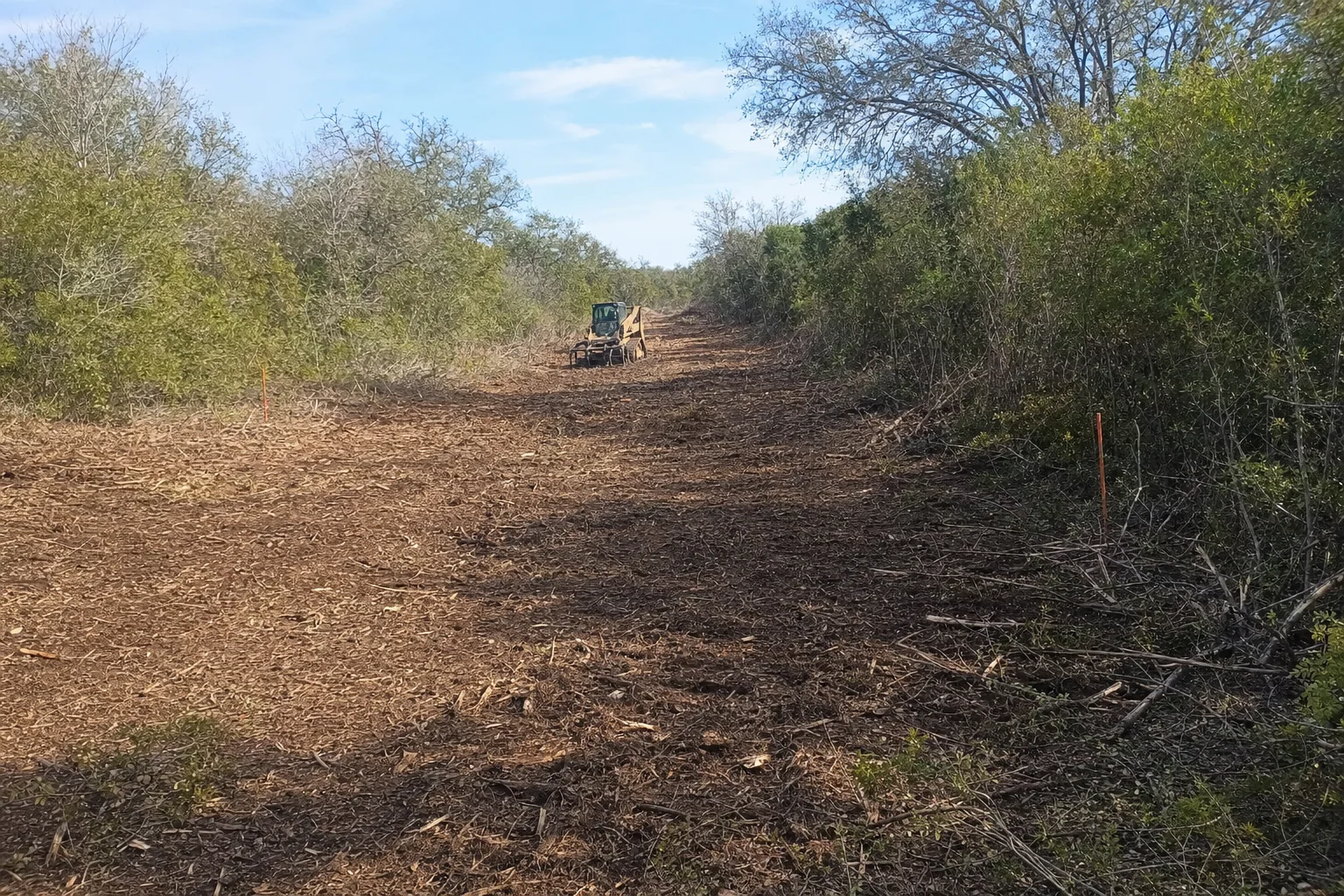
How the work is approached
Review plans and easement limits, identify utilities and crossings, then choose cutting, mulching or grubbing for the specified corridor.
What the finish looks like
The agreed width, clearance, material finish and access conditions, with exclusions documented.
What this does not include
Work around energized lines, live facilities or specialized utility hazards requires the relevant approvals and qualified arrangements.
Where the material goes
Mulch depth, windrows, stockpiles and haul-off are decided against the project specification.
What changes the estimate
Width, length, vegetation, crossings, terrain, access and the required documents or controls affect pricing.
What happens afterward
Define inspection, stabilization and future maintenance responsibilities before handover.
A few straight answers
Can you quote from plans?
Plans are a useful starting point when they include limits, dimensions, access and finish requirements. Site conditions still need review.
Is ongoing maintenance available?
A maintenance scope can be planned around the corridor’s growth, access and asset-owner requirements.
Method reference: Texas A&M Forest Service — vegetation management. Construction disturbance and runoff: TCEQ guidance. Site-specific requirements still need review.