
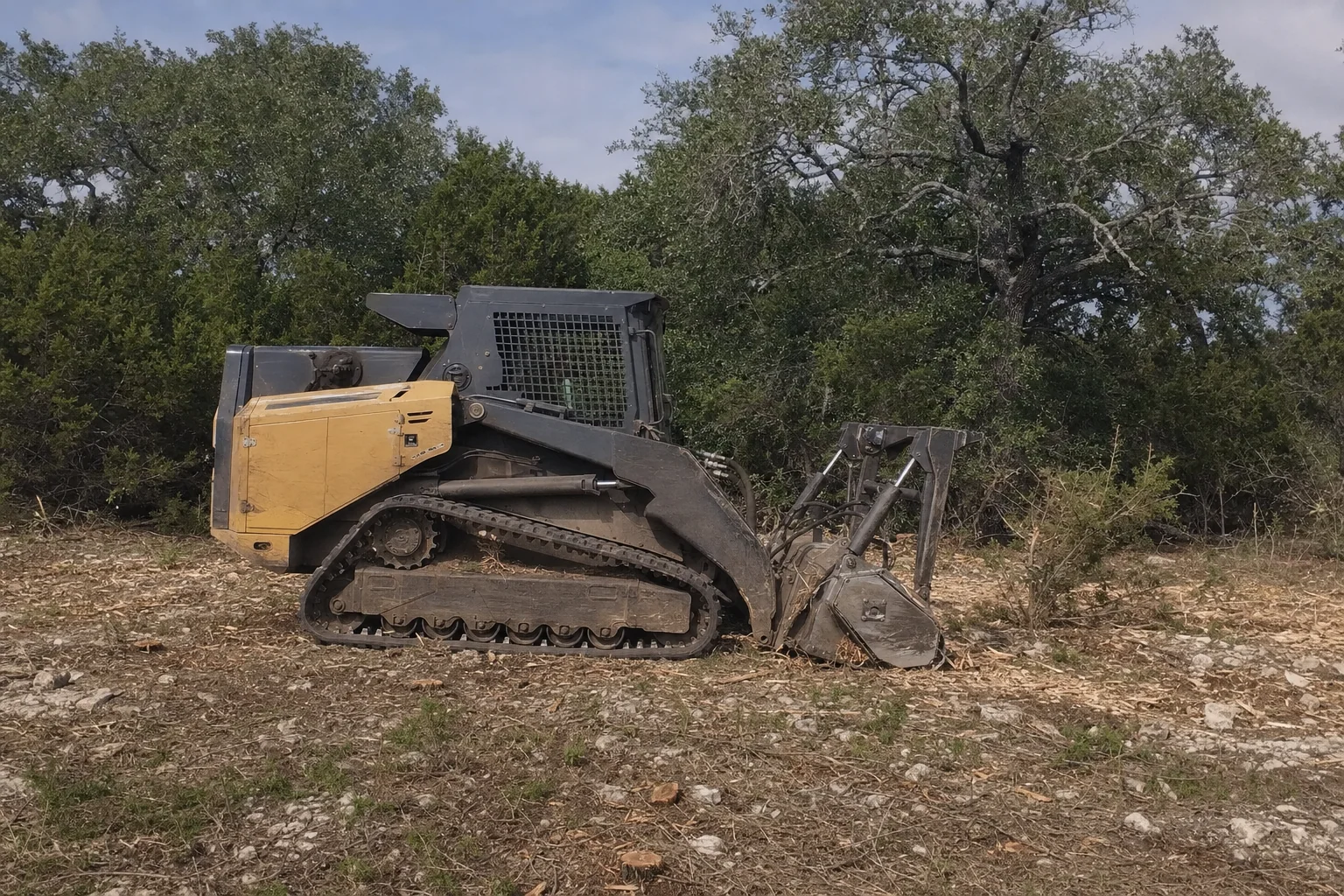
How the work is approached
Suitable cedar is cut or mulched, with hand work where equipment cannot safely reach. Full removal and root work are separately defined when the land use requires them.
What the finish looks like
Selected cedar removed from the agreed work area, with retained trees and ground cover considered in the plan.
What this does not include
Do not assume every juniper is unwanted or that all species respond the same way to cutting. Habitat, slope and local restrictions can affect the scope.
Where the material goes
Mulch may remain on site. Larger material and concentrated piles need a separate handling plan.
What changes the estimate
Rock, slopes, the size and spacing of cedar, retained trees and access for the equipment affect production.
What happens afterward
Monitor new seedlings and regrowth. Keep the opened area manageable rather than waiting for another dense stand.
A few straight answers
Can you clear cedar and keep live oaks?
That can be the aim of a selective scope. Mark the oaks and work limits first; close growth may need careful hand work.
Is cedar clearing always a full clear?
No. Thinning, access lanes and view openings can leave substantial cover. The amount removed is an owner and site decision.
Method reference: Texas A&M Forest Service — vegetation management. Construction disturbance and runoff: TCEQ guidance. Site-specific requirements still need review.