
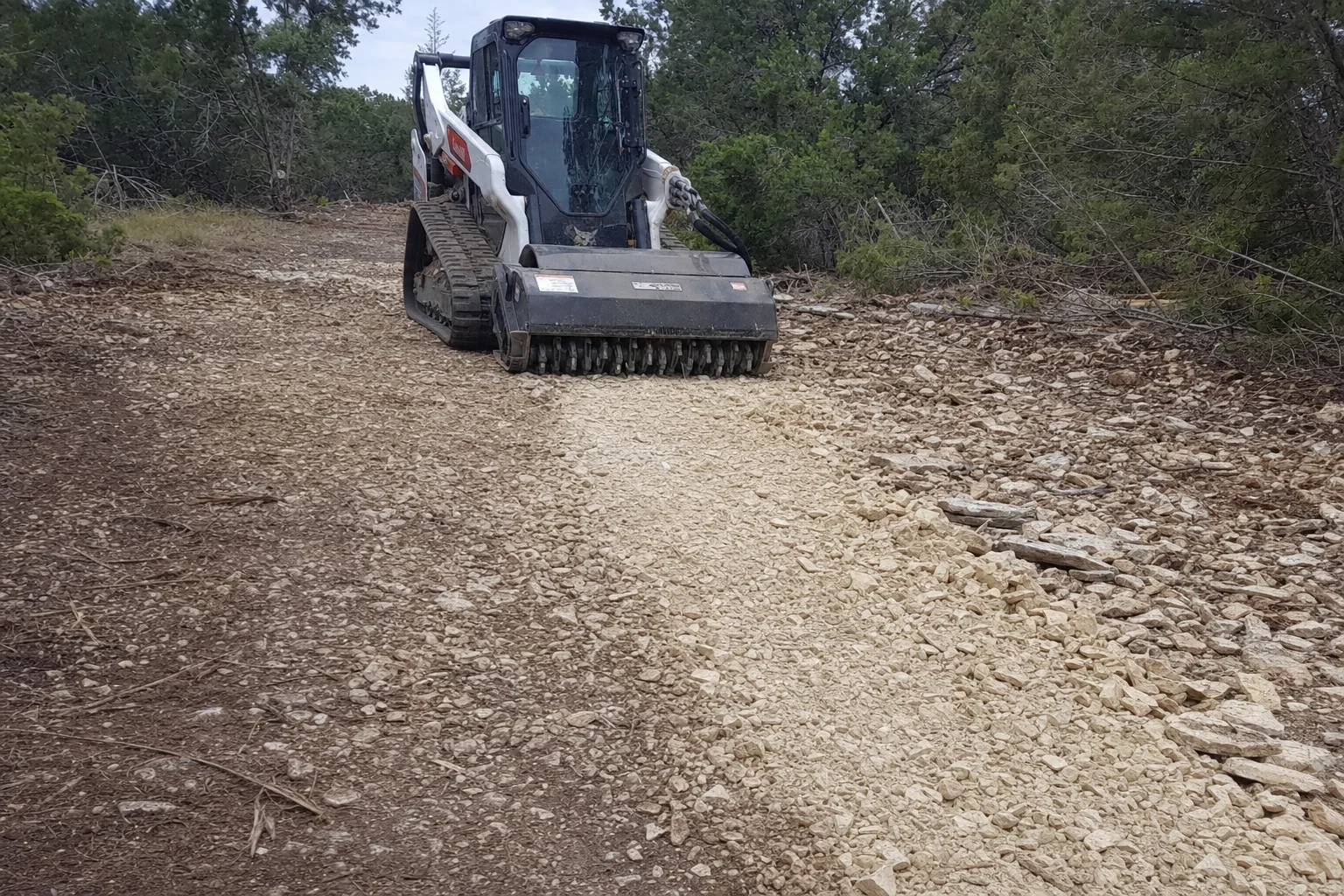
How the work is approached
Assess the material and working depth, check for utilities and unsuitable objects, and define a trial area or agreed finish before broader processing.
What the finish looks like
Processed surface material within the defined work area. Particle size and depth are dependent on the rock and process.
What this does not include
Rock milling is not blasting, deep excavation or a guarantee that every kind of rock can be processed economically.
Where the material goes
Processed rock normally remains on site. Screening, removal and imported finishing material are separate work.
What changes the estimate
Rock hardness and size, area, depth, slope, wire or debris and the desired finish affect production.
What happens afterward
Review the finished surface against the intended use, especially before vehicle traffic, seeding or further construction.
A few straight answers
Can you mill any rock?
No. Material, depth, equipment suitability and access need review before a firm scope can be set.
Will the surface be ready for grass?
That depends on the remaining soil, processed material and the establishment plan. Milling alone does not create topsoil.
Method reference: Texas A&M Forest Service — vegetation management. Construction disturbance and runoff: TCEQ guidance. Site-specific requirements still need review.