
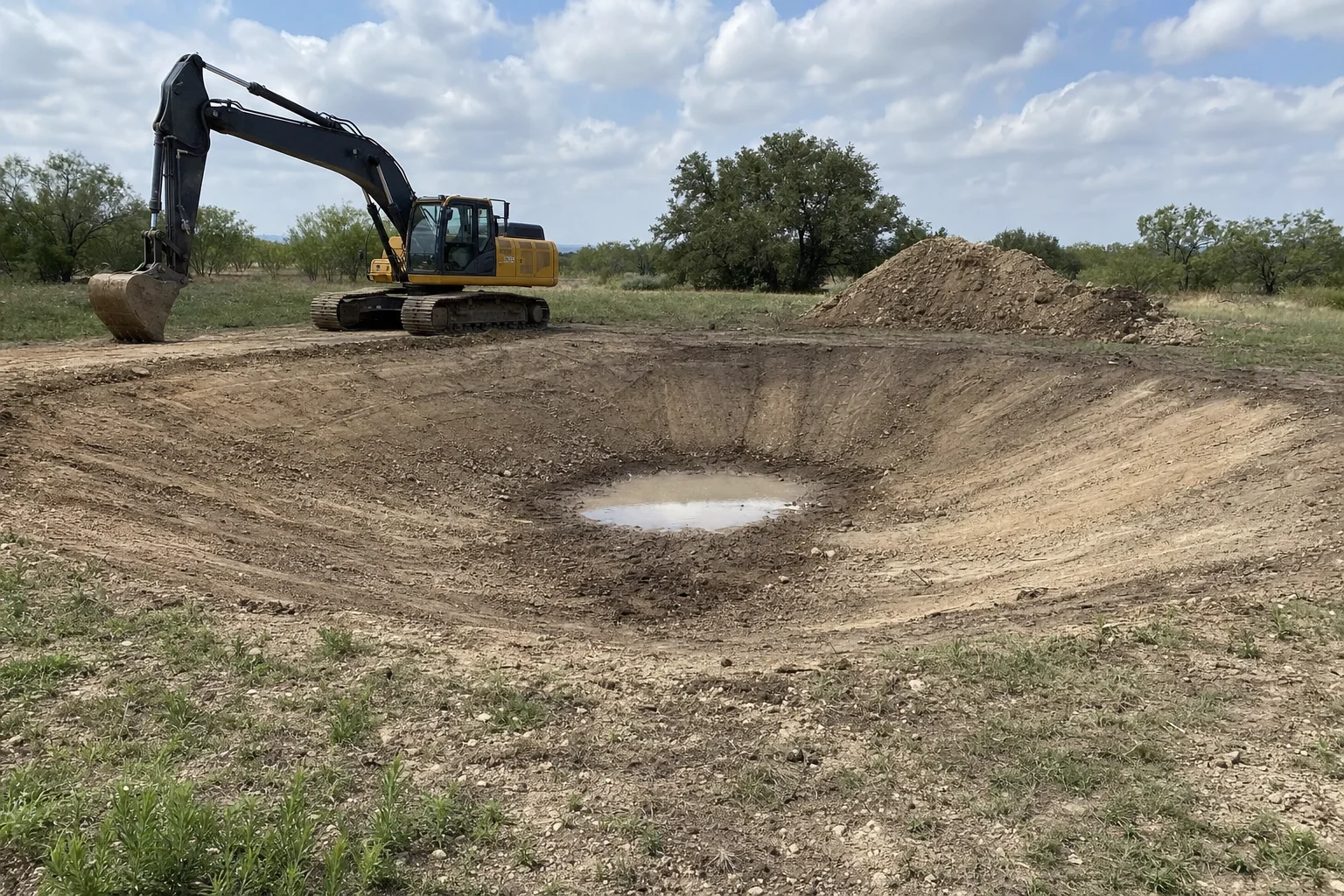
How the work is approached
Review the proposed site and required design. Scope excavation, suitable sealing material, banks, spoil placement and access with the appropriate project guidance.
What the finish looks like
An excavated or restored basin to the agreed plan, with the included bank and spillway work defined.
What this does not include
A pond’s ability to hold water is not guaranteed by excavation alone. Dams, streams and regulated waters can require specialist review or authorization.
Where the material goes
Excavated material needs an agreed placement area. Unsuitable soil, sludge, hauling and dewatering change the scope.
What changes the estimate
Depth, soil, rock, water conditions, access, sealing requirements, spoil handling and bank work determine cost.
What happens afterward
Follow the maintenance and inspection requirements for the completed pond, banks and spillway.
A few straight answers
Can you deepen an existing pond?
It can be reviewed, including water conditions, sediment, access, spoil placement and whether the proposed work affects the dam or spillway.
Will the pond hold water?
That requires evaluating soils, the water source and any sealing or design needs. A depth estimate alone cannot answer it.
Method reference: Texas A&M Forest Service — vegetation management. Construction disturbance and runoff: TCEQ guidance. Site-specific requirements still need review.