
LOCAL GROUND NOTES
Start with the place.
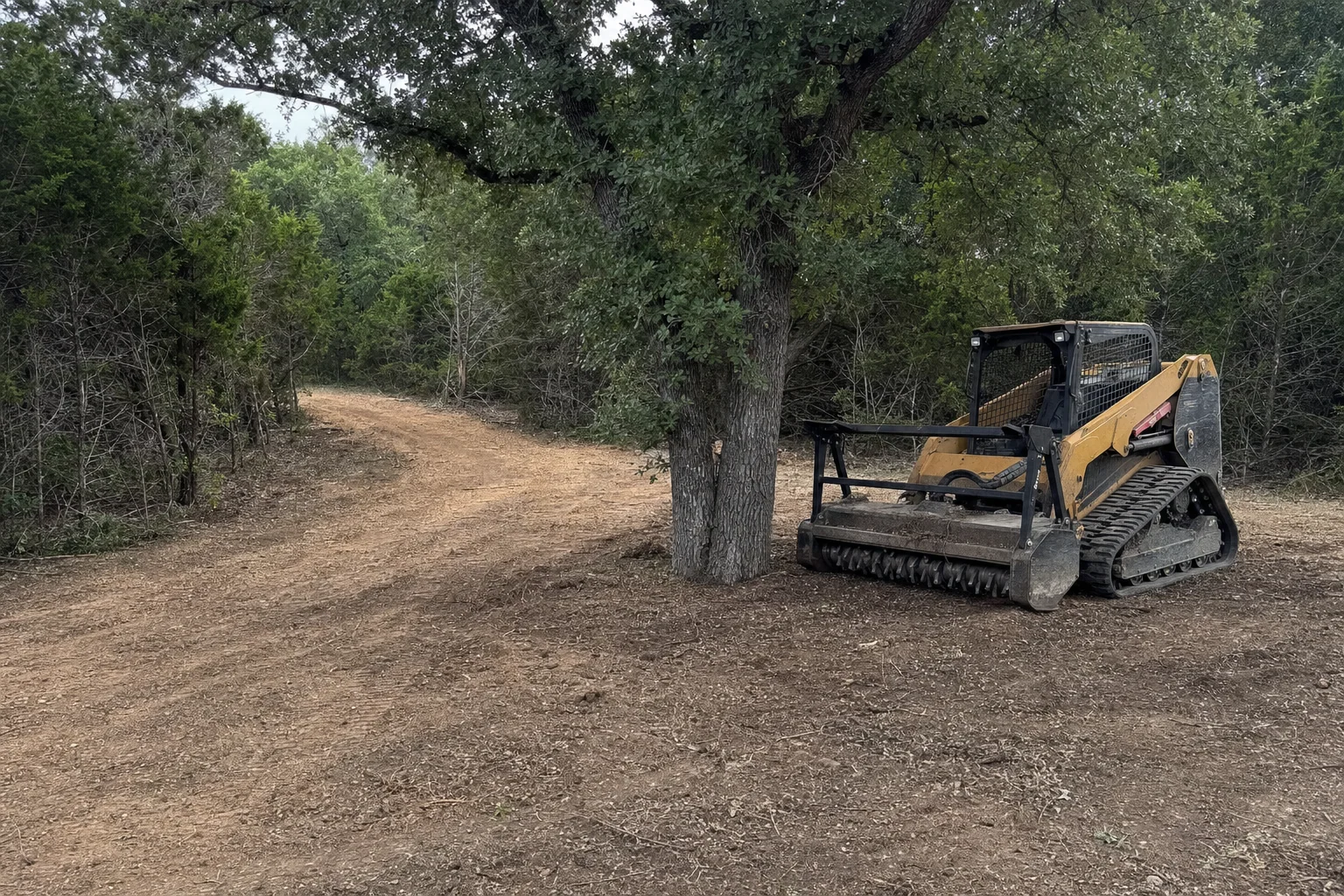
Georgetown publishes specific guidance for Heritage Trees and review of removal or pruning. Identify larger retained trees before laying out a driveway or homesite opening, so equipment access is planned around the trees the owner wants to keep.
What matters around Georgetown
Central Texas crosses prairie, woodland and plateau transitions. A useful estimate starts with the parcel location and the intended finish, rather than assuming that every Austin-area or Brazos Valley acre needs the same treatment.
- Confirm the parcel jurisdiction before applying a nearby city's requirements.
- Keep selective brush work distinct from grading, pads and root removal.
- Locate drainage paths and retained trees on the work sketch before mobilization.
Make the entrance part of the plan.
For a job near Georgetown, include the route from the road to the actual work area. Gate width, turns, crossings and soft areas can affect machine access and transport. The nearest town helps locate the job; it does not determine every condition on your land.
Send the area to treat, what needs to stay and the intended use. For a fence line or trail, include length and width. For construction, attach the current work limits and specifications.
Agree on what is left behind.
A mulched understory, a grubbed footprint and a graded site are different finishes. Your scope should identify roots, remaining woody material, haul-off, backfill and stabilization. See how the estimate is put together.
Questions near Georgetown
Where can I check whether a Georgetown tree needs special review?
Start with the City's Heritage Tree guidance and Planning contact. Identify the species, size and location instead of treating all trees on an acreage the same.
Local reference sources, reviewed for this planning guide:
Williamson County is a location reference; some cities cross county lines. Confirm the authority for the actual parcel and proposed activity. This is a service-area page, not a claim of a local office.